
Knowledge of Flow Switches
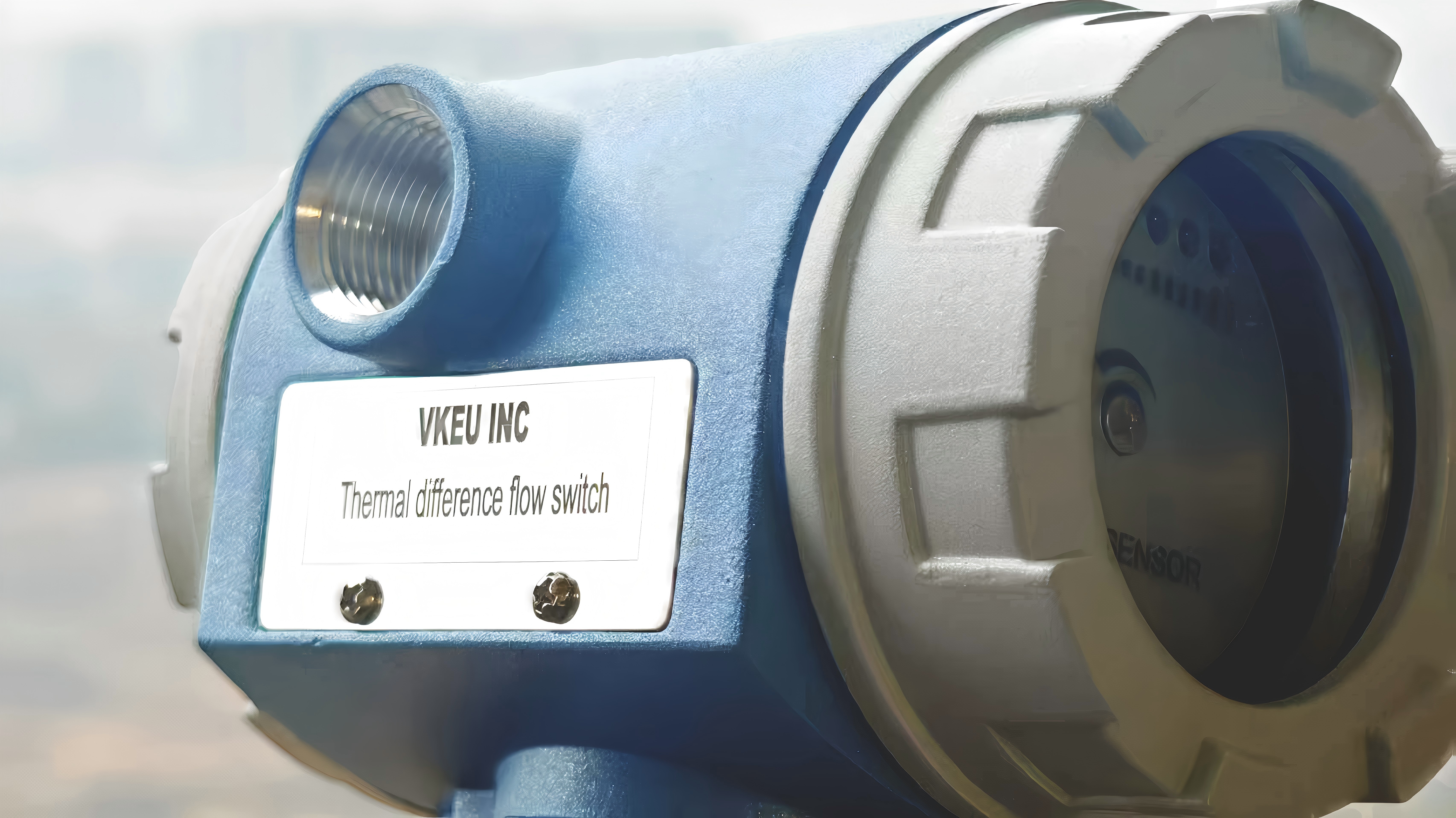
Flow Switch
A flow switch is a type of control switch that monitors the flow state (flowing or non-flowing) of media such as water, oil, and gas in pipelines, and performs opening or closing actions accordingly.
A flow switch can be configured with an upper or lower limit. When the flow rate reaches the preset value, the flow switch sends a signal or triggers an alarm, and the system will start or stop operation to avoid or reduce dry running of the main unit.
Common applications of flow switches include: pump protection, cooling water or heat exchanger systems, drain pipe flow monitoring, safety valve tracking, etc. Generally, all systems that require flow monitoring and control will be equipped with flow switches.
The main function of a flow switch is to trigger the alarm system and send an alarm signal to the control unit when the flow rate of the medium reaches or exceeds the preset value.
Upon receiving this signal, the control unit will issue corresponding instructions to shut down or start the system, thereby achieving flow control. It is widely used in medium pipelines to monitor the water flow rate in water systems.
Working Principle of Flow Switches
The working principle of a flow switch is based on the flow of the medium through the switch. When the flow rate of the medium reaches or exceeds the preset value, the flow switch sends an activation signal; when the flow rate of the medium is lower than the minimum flow rate required for activation, the switch sends a shutdown signal. These two types of signals are respectively transmitted to the equipment's control system to realize flow control.
Types of Flow Switches
Common types include paddle flow switches, thermal flow switches, and differential pressure flow switches.
Paddle flow switches, also known as insertion flow switches, are classified as mechanical flow switches.
Paddle flow switches should generally be installed in the pipeline section from the water pump outlet to the equipment outlet. They must not be installed on the pipeline at the water pump suction port, as this will prevent the water pump from drawing water normally and also disable the activation of the flow switch. Special attention should be paid to this requirement.
Paddle flow switches allow both horizontal and vertical installation.
Paddle flow switches are suitable for both gas and liquid media, and can be widely used in industrial automation, mechanical equipment, air compression industry, refrigeration and air conditioning fields. Specific industrial applications include water-cooled welding machines, laser equipment cooling systems, vacuum coating machines, electric furnaces, polysilicon ingot casting furnaces, etc. Thermal flow switches are also referred to as electronic flow switches.
Thermal flow switches are designed based on the principle of temperature variation of the detection head. A heating sensor and a temperature-sensitive sensor are built into the probe, which is in direct contact with the medium.
During measurement, the heating sensor emits a constant amount of heat. When there is no medium flowing in the pipeline, the heat received by the temperature-sensitive sensor remains constant. When the medium flows, the heat received by the temperature-sensitive sensor changes with the flow velocity of the medium. The temperature-sensitive sensor converts this temperature difference signal into an electrical signal, which is then further converted into a corresponding contact signal or analog signal through the circuit.
It features easy installation and is suitable for a variety of pipe diameter requirements. The flow switch can conduct real-time monitoring of the liquid flow status in the pipeline and provide switch output signals. It can be used to monitor the fluid flow velocity in the pipeline, detect flow interruption, or prevent pump dry running. It is widely applied in various industries where it is necessary to monitor the fluid flow velocity in pipelines or protect key equipment in the event of liquid flow failures.
For water flow measurement, differential pressure flow switches can obtain accurate flow rate data by measuring the pressure drop across components such as valves and orifice plates.
The flow rate is calculated using the pressure drop method. By comparing the measured pressure difference between the two sides of the differential pressure switch with the preset value, the flow rate can be accurately controlled.
It is widely used in large, medium and small-sized air-cooled or water-cooled chillers equipped with plate heat exchangers, double-pipe heat exchangers and shell-and-tube heat exchangers, for water flow control as well as monitoring the operating status of water pumps and water filters.